
Digital wallets push gift cards into the mainstream
September 25, 2026 | 5 minute read
It’s rare to witness a classic payment instrument not just endure but thrive by reinventing itself. Such is the case with gift cards.
Robin Reodica, senior product manager for Bank of America’s gift card program, has witnessed this evolution firsthand over nearly two decades. Reodica recounted that when he first began working with gift card programs, issuers were limited to offering them as physical cards in physical stores. However, over the last 18 years, the industry has expanded purchase options by form, specifically digital, and increased the places where they can be purchased.
Gift cards have blossomed into a sophisticated tool for consumer engagement, brand building and revenue generation for merchants, he said.
This evolution signifies a shift toward omnichannel accessibility as merchants are no longer confined to selling gift cards exclusively in their brick-and-mortar stores. They now use diverse channels, including third-party malls, online platforms and their proprietary merchant apps, facilitating a seamless digital experience for consumers, he said.
This approach aligns with findings from a Bank of America survey, which underscored what Reodica called “growing popularity and changing behaviors around gift card usage.” The survey found that 81% of consumers bought a gift card in the past year, which was 6% higher than the year before.
The appeal is widening because “you can now add that physical card to your [digital] wallet, if you want to add it to your Apple Wallet or your Google Wallet,” he said.
A strategic asset
From a merchant’s perspective, gift cards remain a highly strategic asset, Reodica said. They are a cost-effective way to get consumers into stores (online or offline) while making sure that a consumer can buy an item or service they want, versus the hit-or-miss proposition of picking out a physical gift for someone.
For consumers the instant, digital accessibility of cards stored in a digital wallet also helps with the problem “of unredeemed gift cards that might end up in a drawer,” he said.
Technological advancements like push notifications are also contributing to higher redemption rates, prompting users to make sure they spend that last $10, for example, which might still be left on a card.
The transformation of gift cards is also intertwined with the concept of personalization and loyalty programs, creating a synergy that benefits consumers and merchants.
“Our surveys say that 64% of our consumers would prefer a gift card as their reward,” Reodica said, adding that those cards can act as a proactive loyalty tool.
He recounted his own experience in which getting a $50 gift card from a favorite merchant drove him right back into the store to spend that $50 — and more.
Bank of America’s survey revealed that when asked if a merchant sent them a gift card, 96% of consumers said they would spend as much or more than the card value.
“Merchants can set parameters on their own funded gift cards, setting activation and expiration dates, for instance,” Reodica said. “This can help a merchant bring foot traffic into the store during non-peak times.”
Beyond domestic use, the new frontier for gift cards lies in their expanding global reach. International expansion means that a gift card purchased in one country could potentially be redeemed in another, offering unprecedented convenience for travelers and a broader market for merchants.
Gift cards give merchants key interactions with customers, which fosters “immediate satisfaction and a way to say, ‘We appreciate everything you’ve done,’ while cementing loyalty,” Reodica told PYMNTS.
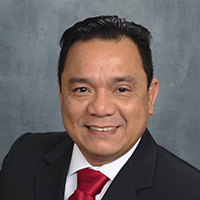
Robin Reodica | SVP, Senior Product Manager, Global Payments Solutions, Bank of America
Apple Wallet is a registered trademark of Apple Inc.
Google Wallet is a trademark of Google LLC.
Written by PYMNTS.com, August 2025.
Important Disclosures and Information
Bank of America, Merrill, their affiliates and advisors do not provide legal, tax or accounting advice. Consult your own legal and/or tax advisors before making any financial decisions. Any informational materials provided are for your discussion or review purposes only. The content on the Center for Business Empowerment (including, without limitations, third party and any Bank of America content) is provided “as is” and carries no express or implied warranties, or promise or guaranty of success. Bank of America does not warrant or guarantee the accuracy, reliability, completeness, usefulness, non-infringement of intellectual property rights, or quality of any content, regardless of who originates that content, and disclaims the same to the extent allowable by law. All third party trademarks, service marks, trade names and logos referenced in this material are the property of their respective owners. Bank of America does not deliver and is not responsible for the products, services or performance of any third party.
Not all materials on the Center for Business Empowerment will be available in Spanish.
Certain links may direct you away from Bank of America to unaffiliated sites. Bank of America has not been involved in the preparation of the content supplied at unaffiliated sites and does not guarantee or assume any responsibility for their content. When you visit these sites, you are agreeing to all of their terms of use, including their privacy and security policies.
Credit cards, credit lines and loans are subject to credit approval and creditworthiness. Some restrictions may apply.
Merrill Lynch, Pierce, Fenner & Smith Incorporated (also referred to as “MLPF&S” or “Merrill”) makes available certain investment products sponsored, managed, distributed or provided by companies that are affiliates of Bank of America Corporation (“BofA Corp.”). MLPF&S is a registered broker-dealer, registered investment adviser, Member SIPC, and a wholly owned subsidiary of BofA Corp.
Banking products are provided by Bank of America, N.A., and affiliated banks, Members FDIC, and wholly owned subsidiaries of BofA Corp.
“Bank of America” and “BofA Securities” are the marketing names used by the Global Banking and Global Markets division of Bank of America Corporation. Lending, derivatives, other commercial banking activities, and trading in certain financial instruments are performed globally by banking affiliates of Bank of America Corporation, including Bank of America, N.A., Member FDIC. Trading in securities and financial instruments, and strategic advisory, and other investment banking activities, are performed globally by investment banking affiliates of Bank of America Corporation (“Investment Banking Affiliates”), including, in the United States, BofA Securities, Inc., which is a registered broker-dealer and Member of SIPC, and, in other jurisdictions, by locally registered entities. BofA Securities, Inc. is a registered futures commission merchant with the CFTC and a member of the NFA.
Investment products: